
Mold concerns are usually connected to moisture. Cleanup matters, but if the damp conditions remain, musty smells and indoor air concerns can return. That is why Beacon looks for the reason the area became wet or humid in the first place.
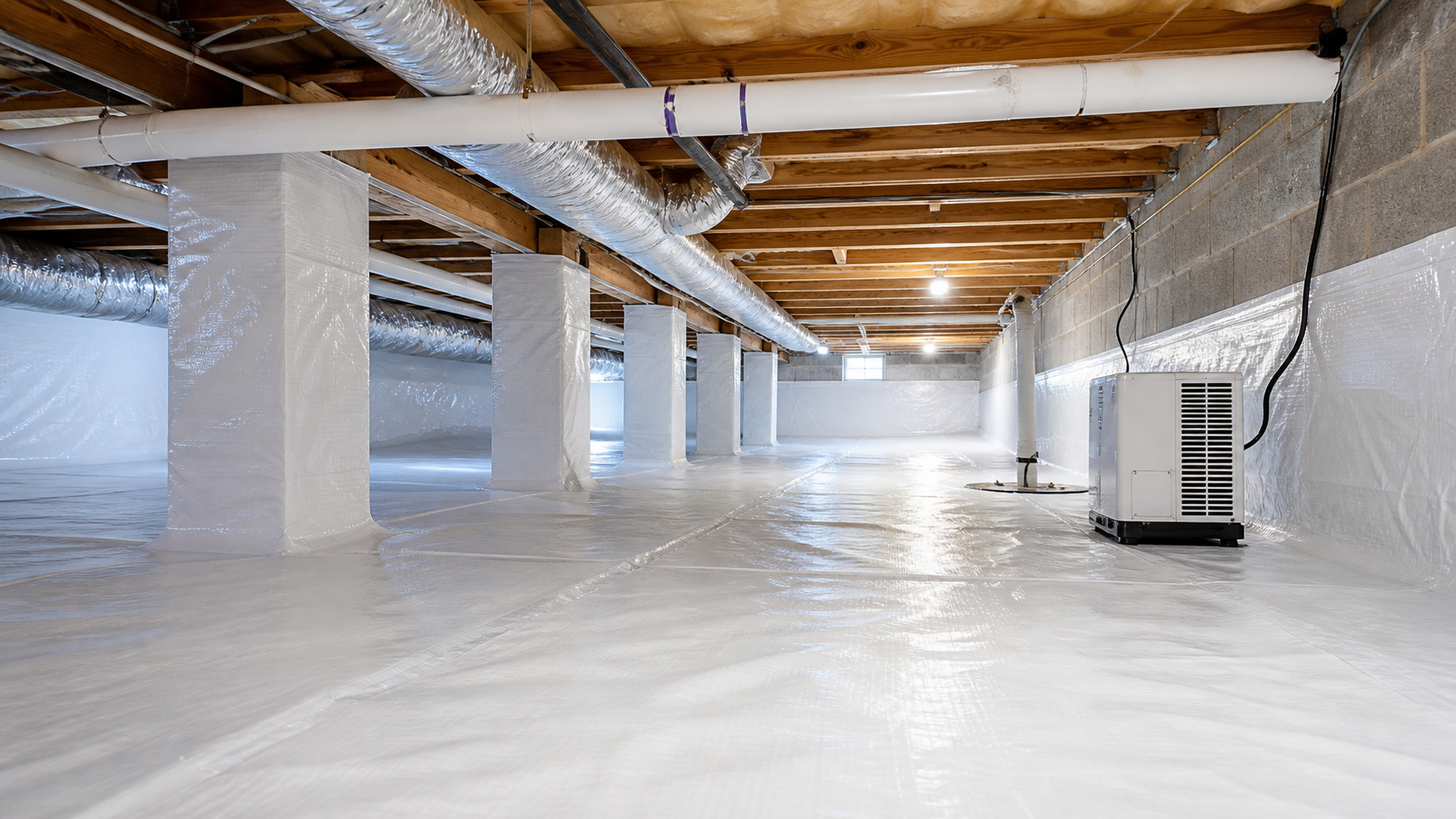
Basements and crawl spaces are common starting points because they can collect groundwater, humid air, condensation, roof runoff, or drainage problems around the foundation. In a crawl space, damp air may also affect insulation, wood framing, and the rooms above.
Moisture clues to pay attention to
- Musty odors in the basement, crawl space, or living areas
- Visible staining or suspected growth on wood, drywall, or stored items
- High humidity, condensation, or damp insulation
- Water marks near foundation walls or floor joints
- Soft materials, damaged trim, or repeated damp spots after storms
Why source control matters
A practical mold remediation plan should consider the water path, humidity level, ventilation conditions, and affected materials. Depending on the property, the right plan may include waterproofing, drainage corrections, crawl space encapsulation, dehumidification, damaged-material removal, and cleaning of affected areas.
Beacon helps identify the moisture source first so the work is aimed at reducing the conditions that allowed the problem to develop.